1:01 · Spanish audio
Guillain-Barré syndrome
Medical education on the nervous system and therapeutic apheresis.
Seven integrated clinical areas. All under the same methodology: biomarkers first, protocol second.
Autoimmune and immunological disorders represent one of the most complex diagnostic and therapeutic areas in internal medicine. NexusMed applies specific protocols grounded in the ASFA classification for therapeutic apheresis indications.
ASFA classification: Categories I and II for plasmapheresis across more than 15 documented immunological indications.
Complete immunological evaluation → autoantibody panel → GEMA plasmapheresis protocol → follow-up with response biomarkers
1:01 · Spanish audio
Medical education on the nervous system and therapeutic apheresis.
Liver disease
Medical history, biomarkers and physician assessment guide each patient's protocol.
0:54 · Spanish audio
A medical explanation of liver disease and the role of plasmapheresis in protocol assessment.
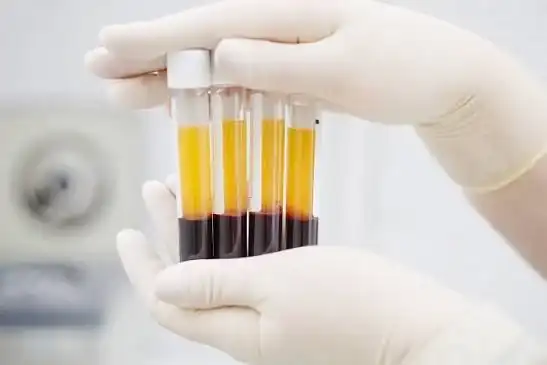
Every sample is processed at a reference laboratory with documented chain of custody. The panel's 80+ parameters reach the physician within 48–72 hours and become part of the patient's clinical record for quarterly comparisons.
0:56 · Spanish audio
The team discusses cirrhosis, plasmapheresis and monitoring parameters such as bilirubin.
Clinical observation
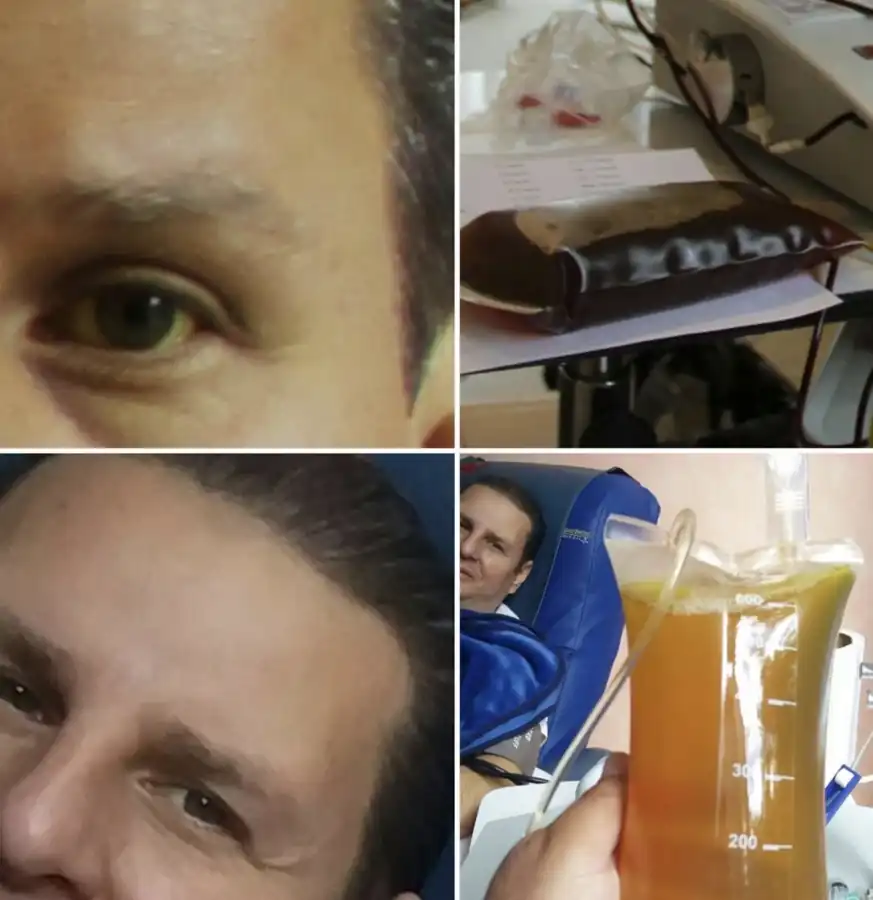
Visual variations in plasma require clinical and laboratory interpretation. A photograph does not establish a diagnosis or demonstrate therapeutic efficacy.
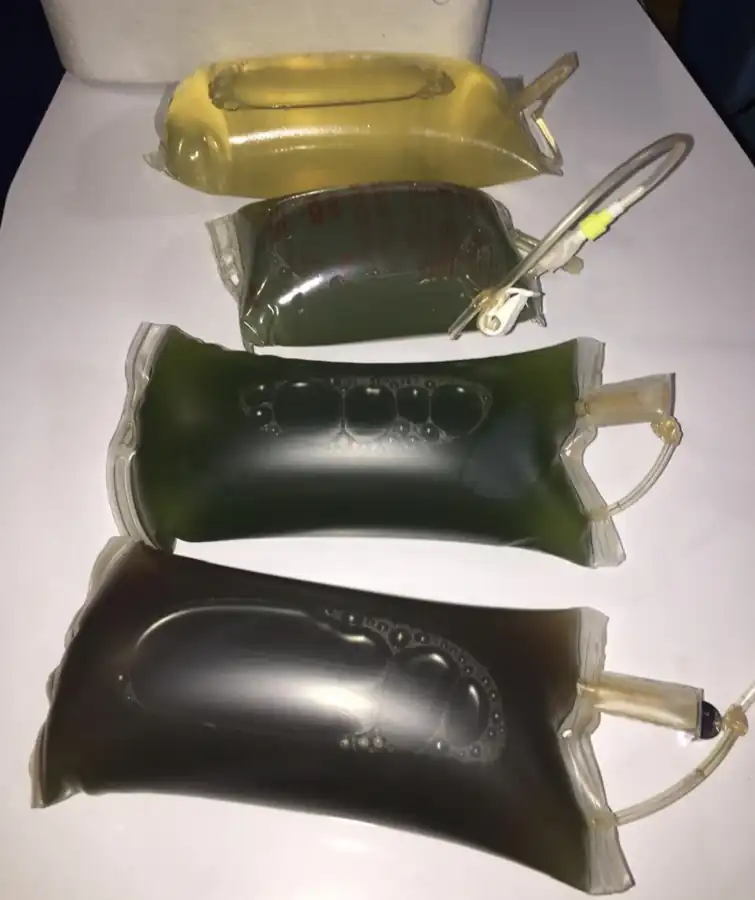
Educational record bringing together facial and eye observations and plasma. Without a verified case history, it must not be interpreted as before-and-after, causation, diagnosis or treatment outcome. Medical evaluation is required.